
[Process] The diagram below shows how coffee is produced and prepared for sale in supermarkets and shops

The diagram below shows how coffee is produced and prepared for sale in supermarkets and shops.
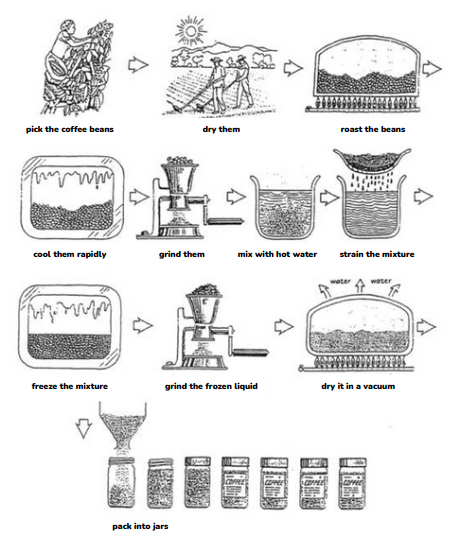
The picture illustrates the process of coffee production and preparation for sale in the market.
Overall, there are a total of 11 stages involved in the production of coffee, starting from the initial picking of coffee beans and concluding with the packing stage.
Beginning with the detailed examination of the coffee production process, it commences with the manual picking of coffee beans in the fields. These freshly picked beans undergo the processes of drying, roasting, and subsequent cooling before being introduced to a grinding machine, where they are transformed into coffee granules.
At the sixth stage of the process, the ground coffee is combined with hot water, resulting in a mixture that is subsequently strained. Following this, the mixture undergoes freezing and is then passed through the grinder once more. Subsequently, the ground, frozen liquid is subjected to vacuum drying to facilitate water evaporation, ultimately leaving behind the desired coffee granules. Finally, these meticulously processed granules are carefully packed into coffee jars, ready for delivery to retail outlets for sale to consumers.
(172 Words – Band 8.0)


Responses