
[Process] The diagrams below show the life cycle of the silkworm and the stages in the production of silk cloth

The diagrams below show the life cycle of the silkworm and the stages in the production of silk cloth.
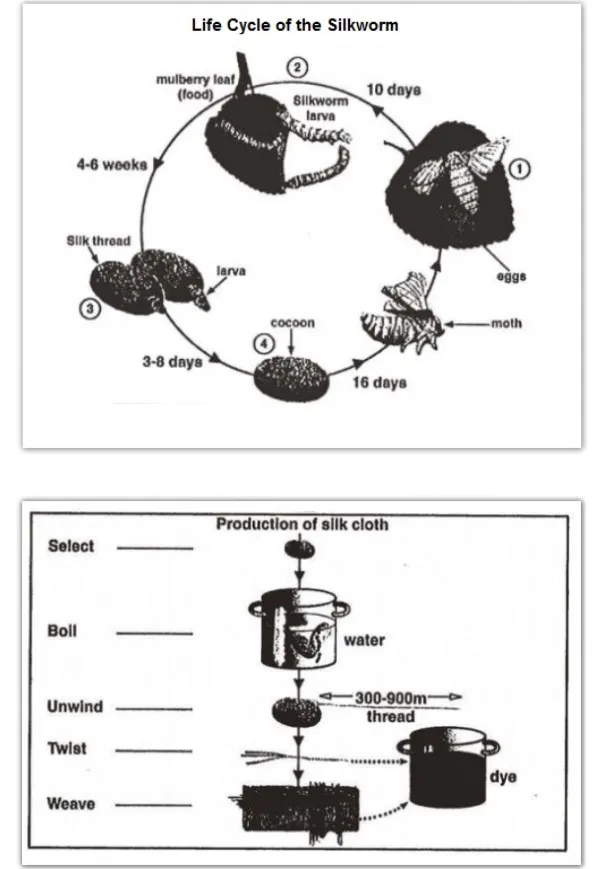
The diagrams provide a comprehensive overview of both the life cycle of a silkworm and the process involved in producing silk cloth.
In the life cycle of a silkworm, there are four primary stages from eggs to adult moth. Concurrently, the process of silk cloth production encompasses six distinct steps, from the silkworm cocoon to the final silk material.
The life cycle begins with the moth laying its eggs, which hatch approximately ten days later, giving rise to silkworm larvae. These larvae consume mulberry leaves as their primary source of nutrition. Over a period of four to six weeks, the larvae become enveloped in silk thread, eventually resulting in the formation of a complete cocoon within three to eight days.
For silk cloth production, the first step involves selecting a cocoon, followed by boiling it in water. Subsequently, the silk thread constituting the cocoon is carefully unwound, after which several strands of thread are twisted together. In the final stages of the process, the thread can either be dyed before being woven into silk fabric or woven first and then dyed afterward.

Responses